Sunday, 8 December 2013

Stands to reason, dunnit?


“Stands to reason, dunnit?”

Often this is just about the entirety of an argument put forward in support of a proposition, by a proponent who considers the proposition to be so blindingly obvious that no evidence is necessary to support it.

A good example is cycle helmets.  Proponents of helmets and helmet compulsion evidently believe that wrapping a couple of centimetres of expanded polystyrene around your head must surely protect your head from damage.  After all, it stands to reason – electrical goods get shipped packed in expanded polystyrene to protect them, so it must be good.  Real evidence of course is harder to come by.  The evidence tends to be fairly inconclusive but it does suggest that head injuries don’t really decline much when helmets are made compulsory, even when cycling levels fall as a result.  Other adverse effects are also observed to come into play, such as rotational neck injuries, or health impacts of reduced physical activity – as in Australia, home of cycle helmet compulsion and apparently second-most obese nation in the world after the USA.

Moving on, a more topical example of the Stands-to-Reason assertion relates to car parking.  In thisdocument, on which the Department for Transport is asking for your comments in a consultation exercise, it is asserted that reducing charges, easing restrictions and obstructing penalties for illegal or inconsiderate parking will benefit town centres.


There is no evidence for this.  Nil, none, nada, zilch, aucune.  It just  ‘stands to reason’ that if people can get parking for free, or for less than they pay now, if they can park for longer than they have actually paid for, or if they can abuse yellow lines and other parking restrictions for example to park within two paces of a shop, that will motivate them to shop more, and more often.  There is however no academic or scientific, empirical evidence or report to support this proposition.  Appeals have gone out on the Twittersphere (from John Dales?  I forget) for information on any such documents.  As far as I know, no-one has come forward.

There is however evidence for the converse, and for the opposite.  Here and here, for example, from Transport Research Laboratory and London Councils respectively.

The converse is that, rather than pricing of parking or the availability of free parking impacting the vitality of a town centre, the vitality of a town centre impacts on the cost of parking.  This was summed up neatly two years ago, shortly before Christmas, when retailers in Wokingham were reported in the local paper demanding concessions on parking charges to boost trade.  The chairman of the local chamber of commerce, however, dismissed this as “putting a sticking plaster on a broken artery” and pointing out that in nearby Reading, parking charges were much higher and yet cars were queuing around the block waiting for access to a car park.

The opposite is that reducing parking charges can actually have the opposite effect.  Maintaining the correct level of charge for the area is an art which local authorities aim to refine, so that they can maximise the number of visitors to a town centre by discouraging excessively long stays during which purchasing activity tails off.  Avoiding “bay-blocking” in other words.  If people who stay an hour spend more than twice as much as those who stay 30 minutes, and more than half as much as those who stay two hours, then pitch the pricing at one hour minimum and high enough to encourage people to get on, shop, and leave so a new shopper can take the space.

An example, it seems to me, of how different parking areas in my own home town sustain different charges and so (probably imperfectly) optimise the use of spaces, is that a car park next door to the supermarket (which has no free parking of its own) charges at 80p per hour while another a hundred yards or so further way charges at 50p per hour, and yet in the former each space is sold twice as many times per day.


All of this of course falls on deaf ears as far as Mr Pickwick is concerned.  He persists in his bleedin’-obvious prejudice that a parking free-for-all would be good for towns, proposing to permit motorists to overstay their time by a “few minutes” (can they not afford a watch?  If not, surely they can see the time on their mobile phones?), or to park “briefly” on double yellow lines – never mind the inconvenience to other motorists, the danger to pedestrians who are now hidden behind parked cars and so  invisible to those motorists as they attempt to cross the road, or the impedance to emergency services attempting pass down congested streets.  Just tie both hands behind the council’s back in its efforts to keep things under control.  Just end up like Aberystwyth, where all parking controls were initially lifted, then after a year of total chaos, anarchy, accidents, arguments and punch-ups, they were re-instated to the profound relief of all, including the usual troublemaker in this matter, the local rag.

Parking controls do matter.  Inconsiderate parking obstructs the highway.  It impedes elderly and disabled pedestrians who need access to dropped kerbs.  It places children in danger when they can’t be seen by passing cars as they try to cross the road from between parked cars.  It blocks cycle lanes, forcing cyclists to swerve out into traffic and put themselves at risk.  Cheap parking, apart from not doing what it says on the tin, attracts more traffic so more congestion, more pollution and more road danger, making the town centre even less attractive to pedestrians and unfairly disadvantaging people who have no access to a car.

Go to the survey, and tell Pickles where he can stuff his parking free-for-all proposals.

Friday, 29 November 2013

The cost of travel


The other day I stumbled on this webpage on the site of the Money Advice Service.


The Money Advice Service, which advertises as “Ask MA” on TV, is a Government sponsored, impartial and free advice service on personal financial matters.

Now I suppose it is my good fortune that, due to some academic ability and years of hard work, but also  - more than both of those together - simply buckets of good luck, I have spent years in an interesting and lucrative job.  I am fortunate that I don’t really need to “Ask MA” myself, but I wholeheartedly applaud their aims, providing counsel to people who have debt problems – my mother, for many years a volunteer counsellor with Citizens’ Advice Bureau, told me that by far the biggest source of problems brought in by their clients was difficulties with debt – and advising people on how to make their limited money go further.  So that they could afford to eat and heat their homes at the same time, for example.

But what am I to make of this?  Their advice on travel seems to me to be heavily weighted towards car use – not only most of the page, but also the whole top part of the page is devoted to a travel mode which nearly half of all households have no access to, and no doubt among those who need to "Ask MA" the most, a good deal more than that.  Advice about public transport or active travel is there, but right at the bottom.

And in any case, their advice is really tinkering around the edges.  First up is “Shop around for cheaper car insurance”.  Well, doesn’t everybody do that, even overpaid gits like me?  How much impact does it have on the overall cost of car ownership?

And then there is “Cut cost of fuel – saving just 5p a litre…could save £100 a year”.  No shit, Sherlock!  But where are you going to find this cheaper fuel, and how many litres will you burn driving around looking for it?

In fact, there follow several suggestions on how you could improve your fuel consumption – like not driving too fast, or braking/accelerating hard, and making sure your tyres are correctly inflated.  I know these work, as I can see that the rolling-average MPG display on our car dashboard can drop about 5% when I am driving instead of my other half, but  this is hardly a game changer, is it?

The one glaring omission in their advice is this:  first of all, before anything else, ask yourself - does this journey really need to be made by car?  How far is it?  How much weight or volume of stuff will you have to transport?  If you are just “popping in” to your local 7-11 a half-mile down the road for a pint of milk or a newspaper, why are you even thinking of driving?  Couldn’t you walk instead?  Save yourself all of the fuel that journey would normally take!  Save yourself paying for parking! Quite possibly save some time not having to hunt around for a parking space.  Get a bit of colour in your cheeks!

And if the journey is more than a mile, but less than say 3 or 4 miles (let’s not over-reach ourselves at the start) why not cycle it?

The site does, to be fair, cover use of public transport and cycling, but the latter is covered in a bare two lines.  There is no discussion of the alternatives to short car journeys.  There is no mention of the lamentable fact that nearly a quarter of all car journeys are under a mile, half are under three miles and two thirds are under five miles – all distances which are ideal for cycling, and indeed up to 2 or 3 miles are probably quicker by bike.  There is no mention of the health benefits, which could also save you money or reduce your risk of sickness absences which might muck up your overtime earnings or even in the worst cases pose an existential threat to your very livelihood.

For a Government sponsored, free unbiased and independent service, would you not expect better than this?

Friday, 22 November 2013

An infamous anniversary


This post really has nothing to do with cycling.

50 years ago today, 22nd November 1963 (also a Friday) US President John Fitzgerald Kennedy was assassinated, in Dallas, Texas.

I first heard of it the following morning.  The shots were fired at about 1pm, Dallas time – 7pm UK time – and death was confirmed about an hour later.  By the time the news percolated to the BBC, as an eight year old child I was no doubt tucked up in bed.

They say everyone remembers where they were when they heard that President Kennedy had died.  In my case, certainly, that is true.

I was sitting in the back seat of my parents’ car when I heard it on the radio.  My father was driving, and my mother, brother and sister were not with us.  We were on the High Street in Lee-on-Solent, just passing the library.  I asked “Daddy – who is President Kennedy?” and my father told me that he was president of America.  I don’t recall feeling any great emotion over this news, but it was plain to hear that it was a truly momentous event so it must have struck me somehow.

The car was a Morris Oxford, sky blue, registration XXB 273.

It was unusual in those days for cars to have radios, and in fact ours didn’t either, but it did have a shelf on the dashboard to rest your home transistor radio, and an aerial lead to plug into the radio’s aerial socket – a fairly common arrangement then.  I assume my father had it installed because he used to drive down every week to his posting at the Royal Naval Air Station Culdrose, not far from Falmouth in Cornwall, and would appreciate having something to listen to.  (Driving then was even more male-dominated than it is now, and married women must have been used to not having use of a car when their husbands were at work)

I don’t really recall what we were doing in the car, or where we were going (it was a Saturday, so not to school) or why the rest of the family wasn’t with us.  What remained etched in my mind was just the scene.  How likely is that I would recall such trivial details, so long after the event, if the event itself  had not made a profound impression?

On a lighter note.

Tomorrow is the 50th anniversary of the first screening of “Doctor Who”.  The first episode was in black and white, and starred William Hartnell.  The Doctor had an assistant even then, but I don’t remember who.  As a scene-setter, the Tardis departed 60s London and arrived in what was evidently the early stone age, outside a structure which might have been inspired by the houses of Fred & Wilma Flintstone and Barney & Betty Rubble.  Which is not to say that Dr Who had the comic overtones which it started to acquire in later years.  As an eight year old, I was quite frightened.
 
I understand the BBC have made an anniversary episode linking back to William Hartnell, played on this occasion by David Bradley (Filch, in the Harry Potter movies) as Hartnell is long since deceased.  Bradley is a fair likeness, if a little craggier and somehow harder in appearance.

 
Who can tell me, in which episode did the Daleks first appear?

Answer: Episode 2.

Thursday, 14 November 2013

Going to the Library


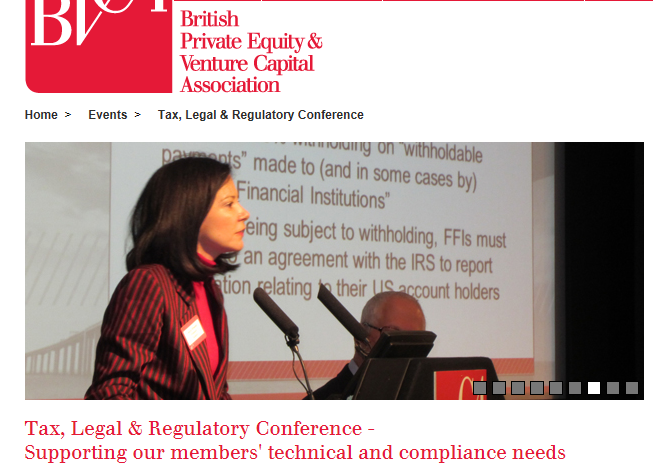
Off today to the British Venture Capital Association’s Tax, Legal & Regulatory Conference at the British Library.


I am sure the excitement must be almost too much for you!

Anyway, first thing this morning I was checking the weather forecast to see if rain was expected during the day.   I will ride my Brompton to work in any weather, all year round – except heavy snow when it gets too slippery – but for commuting I would be wearing waterproof trousers and jacket if necessary.  The BVCA TLR conference is very much a suit & tie affair, so I had to be able to ride in said suit & tie, for which I need no expected or recent rain – a wet road kicking up spray from passing HGVs is if anything worse than water falling out of the sky.

I have to say that it was with some apprehension that I contemplated today’s ride, reflecting on the events of the last eight days, in which there have been five tragic fatalities of cyclists at the hands of buses or HGVs – and one miraculous escape when a car turned across the path of a lady cyclist, flipping onto its side in the process (how on earth could that happen, on a busy London street with a 30mph limit?) and her plastic hat apparently was able to bear the 1.5 tonne weight of said car resting on her head and “save her life”. 

(I submit, m’lud, that what saved her life was the several public spirited members of the public, including some whose names would no doubt have the Daily Mail slavering about immigrants and islamist fanatics and all their other hag-ridden fantasies, who bodily lifted the car enough for her to wriggle free).

But, with dry roads, no anticipated rain, and a route which mercifully involves no Cycle Superhighways and goes nowhere near Bow Roundabout, although it does go closer than is comfortable to Kings Cross, I set off.
 
Almost all of the route takes me through the Bloomsbury district of London – High Holborn, Red Lion Street, Lamb’s Conduit Street (no motor vehicles) and then Brunswick Square and Judd Street.  I finally emerge at Euston Road but fortunately my destination is literally just across the street so the logical thing to do is walk across as a pedestrian when the traffic lights go red.  That isn’t particularly pleasant though – there is no green man at the lights, the red-phase for traffic in each direction is short, and you can’t cross in one stage, instead you must wait on the central reservation for another break in the traffic.


From unfold to re-fold, including waiting for every red light to turn green – natch – and the walk across Euston Rd and through the courtyard at the Library, took under 15 minutes, at a leisurely, suit-wearing pace.  Coming back, with a very slight downhill and a brisk, cool following wind, took less than 10.  There is no way I could have done that in a taxi, much less so by tube.

So, while reflecting on the personal tragedies of the last week, I am still convinced that my bicycle is the best and fastest way of going about my business, professional or personal.  I would, though, like some #space4cycling.


You can support the #space4cycling campaign by joining LCC – look here. 

Sunday, 20 October 2013

Hulk


Last night I sat with the kids watching “Hulk” on TV.  It is a film adaptation of the old Marvel Comics’ “The Incredible Hulk” – you know, mild-mannered scientist Dr David Banner performs an experiment on himself which goes wrong, so that whenever he becomes mildly annoyed he turns into a huge, green, rampaging monster wrecking property all around but somehow managing not to hurt people, even the bad guys?  I assume the author may have taken his inspiration from the classic Robert Louis Stevenson novel “Dr Jeckyll and Mr Hyde”.
 
Dial back 12 hours, and I am driving to my weekly Saturday French class.  This is one of only two car outings I regularly do every week (the other is to the gym – don’t ask).  With irregular or ad-hoc outings I probably average four outings a week in the car.  I spend more time on my bike than in the car, although of course I travel less far.
 
At its very best, with clear roads, in the countryside and with a nice view to admire in front of me, I view driving with mild dislike.  At its worst, in cities, busy motorways, or congestion, I loathe it.  Yesterday was at the worst end.  Forewarned that there was a major tailback on the A3, I decided to take the back roads to Guildford, to my French tutor Anne-Sophie.
 
Needless to say, the back roads were also congested, thanks to all the motorists rat-running looking for ways around the traffic jam on the main route.  Stuck in slow moving traffic, with queues at every light and junction, I feel blood pressure rising and red mist descending.  I start to mutter angrily, starting off with fairly mild stuff – “Come on, Grand-dad” – and gradually the density of expletives increases.  I am beginning to feel slightly ill, and I start to think “I wouldn’t have to put up with this on my bicycle”.
 
Indeed I would not.  I could, in principle, get to Anne-Sophie’s place by train.  Guildford is the first stop on my daily commuter journey.  I could cycle down to the station, use my season ticket (valid seven days, used five, per week) get off at Guildford and walk up to her house.  It would take a little longer  - perhaps 40 minutes instead of 25 – but I could read, or relax, on the 15-20 minute train journey.
 
So why don’t I?  And why do I get irritated about driving?  In either of those respects I am far from alone – I see impatient or aggressive driver behaviour in others every day.  There is probably some psychological research on it, no doubt involving cramming more and more rats into the same small cage.  I see people making car journeys when alternatives would be barely less convenient and certainly cheaper, especially if as so often you have bought the ticket already.
 
I don’t know, but thinking about my car journey and my impatience and frustration with it, I can’t help thinking of that other famous saying of Robert Louis Stevenson:
 
"Little do ye know your own blessedness; for to travel hopefully is a better thing than to arrive”

Tuesday, 1 October 2013

Why do I cycle to the shops?


The 2011 census figures revealed a significant variation in cycling modal share across the UK.  The average was a miserable 2% or so, and obviously the share was even lower in many places – that is after all the implication of an average value – while some municipalities stand out as having quite a healthy share.  Cambridge, York, Oxford, Gosport (where?  I hear you ask), Hackney, Bristol have double figure percentages of those who travel to work using a bicycle for that journey.

But the Census only reports commuter journeys.  It has no information on other utility cycling journeys – to school for example, or to the shops, pub, cinema or, dare I say, the gym.  If it did, I am sure the result would look pretty miserable, even in the places listed above.

This form of utility cycling is probably largely the preserve of the committed, those who are Making a Point, capital m, capital p. 

But I cycle to the shops, or at least at weekends when I am not at work our household shopping trips are done on two wheels.  Why?

Is it because it is good exercise, and I need the exercise?  Well, yes, I suppose that is a factor – I can feel virtuous about the fact that I am doing something to maintain my fitness, and I can feel clever about the fact that I am multi-tasking, doing two useful things with the same ration of precious time in a busy world.  Of course, I get the same smug feeling about using a bike as part of my travel to work, riding at either end of my train journey into Waterloo.

Is it because I am saving money by not consuming fuel and paying parking charges?  I suppose so – but I am fortunately not one of those whom the RAC Foundation describe as being in “transport poverty” spending 25% or more of their disposable incomes on motoring.  Note that the RAC is evidently pleased that Gorgeous Georgie has again frozen fuel duties, and promises to continue doing so until the next election, to help “the hard working (or is it hard-pressed?  I am never sure what is the difference) motorist”, but is apparently insensitive to the fact that for low-income people, non-fuel costs like insurance and maintenance still account for 70% of their motoring costs, while fuel duty accounts for perhaps 15%, and for more affluent motorists, driving newer more expensive cars, the influence of duty is even less.  No, luckily 80p for an hour’s parking down town makes no meaningful dent in my wallet.

Is it because I save on carbon emissions, greenhouse effect, NO2 (my car is a diesel so this is a factor) and carbon monoxide, not to mention congestion, noise pollution and potential road danger to others?  I guess – I certainly don’t mind the smug feeling I get from “saving the planet”.

However, the main reason I cycle to the shops is that it is easier, and quicker, than driving.

I live 1½ miles from our town centre, an ideal distance on a bike.  Thankfully, the route is reasonably quiet and safe.  The town centre is poorly endowed with cycle parking but as I am in a minority of not much more than one at the moment, it is adequate.

Driving however is a different ballgame altogether.  The small time advantage for getting there is totally lost hunting for a parking space, even if the road is not already jammed up by all those other motorists hunting for a parking space.  This especially can be a problem because in this prosperous town motorists would far sooner find an on-street space (free) than shell out 50-80p for an hour in one of the borough car parks.  In fact illegal parking on double yellow lines has got completely out of control, so that West St, one of the two principal shopping streets, is reduced to a single lane for two-way traffic.  The Surrey Fire Brigade has expressed concern to the council because this street is its principal route out of its fire station responding to emergencies. 

The congestion spreads, around the corner into the High Street which is also a main road, the A286.  Traffic regularly backs up behind cars wanting to turn into West St but unable to because oncoming traffic has obstructed them.

In the main car park, closest to the Waitrose supermarket, motorists regularly drive round and round, going the wrong way through a one-way system, hunting for a space to suddenly become available.  Just because it is about 50 metres closer to the supermarket exit than the other main car park.

I can load up a full weekend’s provisions for a family of four in two wire baskets hooked over my rear rack.  The baskets double as shopping baskets in the supermarket.  They can get quite heavy, which means I have to watch that the bike doesn’t do a wheelie before I set my weight in the saddle, and the gentle climb home feels steeper, but nothing I can’t manage.  I even get a 60p rebate from my bill, to compensate for the car park costs that I haven’t incurred!

Having become involved recently in our “Localism” project, I have been impressed to discover that many of my neighbours would like to do the same as me, if only they felt safe and comfortable doing so, and are arguing for speed reductions and dedicated infrastructure to make that possible.

Not much chance of that while fat c*nts like Eric Pickles move heaven and earth to remove all obstacles to “hard working people” driving a few hundred metres and parking on yellow lines to pick up a newspaper.

Thursday, 12 September 2013

A helicopter saved my life


Before anyone starts, yes, I know, it should be “An helicopter saved..”

This morning, Evening Standard Columnist Ross Lydall tweeted this, with a link to the story:


I have included my rather flippant reply – the air ambulance may well have saved his life just as much as the helmet, so I think from now on I will arrange to have a chopper hover along behind me whenever I am out and about on my bike.

Seriously though, you should take a look at the story on the London Air Ambulance website.  Whether you regard helicopter emergency services as a cost-effective health offering or not, there is no question that the pilots and doctors who work for it are brave, dedicated and conscientious people, and in any case most of the cost is funded by public voluntary donations.
 
But look at the story.


I think it is entirely possible that Chrishan’s life was saved by his helmet – it does happen, from time to time, even if it is far less significant a factor than some people would have you believe.  What is far more interesting, and significant, though is why he needed a helmet to save his life in the first place.


(The Twitter timeline suggests that Ross Lydall is going to look into whether the cab driver was prosecuted for dangerous driving.)

Update - Ross has reported the incident in the Evening Standard and it does seem that the police are "considering" a prosecution of the minicab (sic) driver - although not until the new year which is nine months after the event!

When you open the webpage, you see summaries of another four case histories down the right hand margin.  Two of these involve falls, from a ladder and at school, but the other two also involve pedestrians run over by cars.


Firstly this


A speeding car
 
Then this


“Tragically hit by a car”.  Tragic indeed for Ms Bowler, who has suffered grieviously and has had a long and difficult rehabilitation.  The account on the Air Ambulance website however is a little vague about the circumstances of Ms Bowler’s misfortune.

So I did a little more digging, and came up with this from the Huffington Post.


“The car lost control, smashing through railings protecting a central pedestrian reservation”.  (Now, I could quibble with Ms Bowler’s analysis of this event – surely it was the driver who lost control, not the car, but this is her story, in her words, and she is the one who has suffered for it).

The rest of her article talks about her experiences with an underfunded health system letting her down with her rehabilitation, but she did at least manage to get help privately, paid for from an interim settlement by the driver’s insurers after she appointed a firm of personal injury solicitors to pursue a claim on her behalf.

What seems reasonably clear from all three stories, one involving a cyclist, another a pedestrian and the third a child, is that their misfortunes were visited on them by drivers.  Those drivers were driving personal transport vehicles (two cars and a taxi) in central London.  In two of those cases definitely, and probably in the third, the driver was wholly or mainly to blame for the incident.

A snapshot, sure, and not representative of London road casualties as a whole, where a disproportionate number of casualties involve HGVs, but it does beg the question why, when use of a private car in a large city centre such as London is entirely unnecessary and alternatives are always available, we actually permit the use of private cars here?

And, to ram home a favourite hobby horse of mine – I really don’t give a rat’s arse whether strict liability promotes cycling, interferes with progress on better pro-cycling measures such as physical separation, or is entirely neutral.  Kids like Liam, ladies like Kim and men like Chrishan should not be compelled to prove* that negligence on the part of a motorist has caused them damage or injury for which they are entitled to compensation.  In Kim Bowler’s case it certainly looks to me like a slam dunk, but the fact is that the insurers could, perhaps did, prevaricate, obfuscate and obstruct until the bitter end to evade their responsibilities.  We need strict liability, and we need it now.

* On a balance of probabilities, in civil Tort law.